
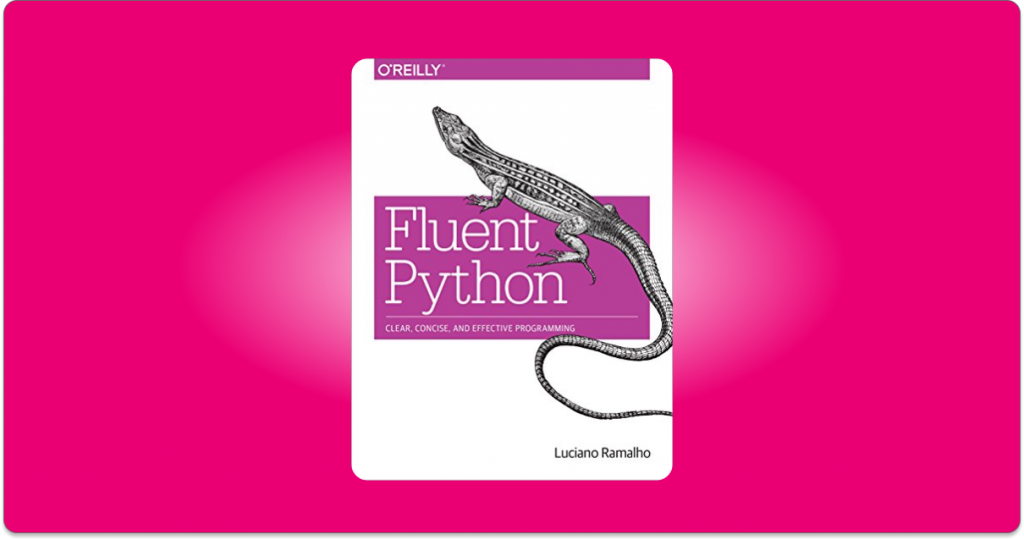
Review of Fluent Python
The following is a detailed review of the book Fluent Python: Clear, Concise, and Effective Programming by Luciano Ramalho.
Fluent Python review: prerequisites and best use
Fluent Python is best for readers who already write Python functions, use collections, and understand basic classes. It helps you reason about idiomatic Python and the language’s object model. It is a demanding first programming book, so start with a beginner resource if those prerequisites are unfamiliar.
Using Python for machine learning? Read the free Starter Kit excerpt on test sets before your first model. No email required; the full Starter Kit costs €19.
Python is a very easy language to introduce yourself to programming. Books like Python Crash Course, or Learning Python are a great way to learn from an starting point.
With them we get expertise and become able to program our own applications to a medium level, however, there are some advanced concepts, features, and practices that escape our knowledge, as it is not within the goal of these previous books to make us experts.
The value of Fluent Python is depth: it connects familiar syntax with protocols, special methods, and language features that are easy to overlook. Expertise still depends on applying those ideas, reviewing code, and learning when a simpler solution is enough.
The aim is clearer, more idiomatic code. A shorter implementation is not automatically faster or easier to maintain; measure performance and ask whether a teammate could understand the result. Topics include:
- Python data model: understand how special methods are the key to the consistent behaviour of objects
- Data structures: take full advantage of built-in types, and understand the text vs bytes duality in the Unicode age
- Functions as objects: view Python functions as first-class objects, and understand how this affects popular design patterns
- Object-oriented idioms: build classes by learning about references, mutability, interfaces, operator overloading, and multiple inheritance
- Control flow: leverage context managers, generators, coroutines, and concurrency with the concurrent.futures and asyncio packages
- Metaprogramming: understand how properties, attribute descriptors, class decorators, and metaclasses work
Stay on track. Get the Roadmap.
Download the 90-Day Roadmap PDF + get weekly tips and resources to help you succeed
The original review refers to the first edition. A second edition is available, with official companion material. Match your examples to your edition, and read in manageable sections rather than treating the book as a speed-reading challenge.
For each topic, write a minimal example, predict its behavior, and then run it. Unexpected output is an opportunity to understand the data model rather than simply memorize syntax.
Fluent Python is not about the style or basics of the language; it covers very advanced features that will leave your co-programmers wondering how you became a master programmer.
Read selectively once you know the basics. Start with collections and functions, then move to generators or classes when they address a real problem in your code.
A couple of words on the examples: they are throughout the whole book well done. The author often presents the same concepts in different flavors or does work on the same example and improves it as concepts are taken into the discussion.
The code is intense but easy to follow. Key lines are extensively explained later on, so that the reader won’t miss that specific features that makes it all possible. There are so many gems that you will probably end up writing most of that code down to make it yours.
This is actually the best thing the reader can do. Try it, modify it, assimilate it, master it.
Once you’ve finished it, you will really understand Python, and know what all those topics that seem a little magical are about. You will really grow as a programmer, but beware, if you are beginner you might feel overwhelmed.
We think this book is best for those who have a wide experience programming with Python and want to take their practice to another level.
You can find the contents of the book on the following link.
About the book
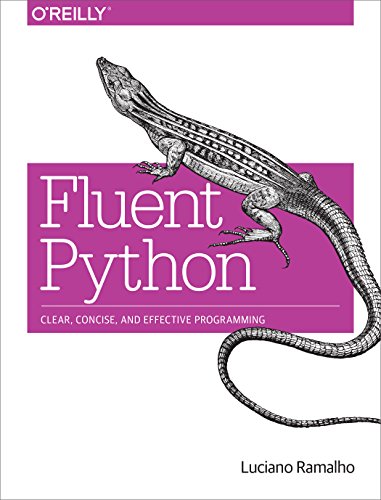
About the author: Luciano Ramalho was a Web developer before the Netscape IPO in 1995, and switched from Perl to Java to Python in 1998. Since then he worked on some of the largest news portals in Brazil using Python, and taught Python web development in the Brazilian media, banking and government sectors. He is co-owner of Python.pro.br, training company.
Pages: 792
Publication: 2015
Summary of Fluent Python
Try replacing a list-building function with a generator, then test empty input and repeated iteration. Explain the tradeoff before adopting it. For more structured practice, explore our Python coding practice resources.
Many people ask if fluent python is a book for beginners, and the answer is definitely no. If you grab this book as a first resource for learning the language you will be overwhelmed. Grab another book or online-course, and once you’ve been programming in Python for a while, come back and devour Fluent Python. Check out our reviews of other Python books and our category on Python Online Courses for this.
For intermediate and experienced Python developers, this is a substantial reference for understanding language behavior. Reading it is a starting point for deliberate practice, not a guarantee of mastery.
Some easier Python books that you might want to check out are:
Some other great resources for Learning Python, after which you will be able to tackle ‘Fluent Python’ are:
Thank you very much for reading How to Learn Machine Learning, and have a fantastic day!
Subscribe to our awesome newsletter to get the best content on your journey to learn Machine Learning, including some exclusive free goodies!
