
Like us at How To Learn Machine Learning, if you’ve written a line of code in the last decade, you’ve felt the ground shaking beneath you. ‘The Future of Programming‘ they call it. In the last year we’ve gone from useful, to problematic, to not reviewing a single line of code.
What’s coming next isn’t just another productivity tool or a smarter autocomplete: it’s a fundamental reimagining of what programming is, who gets to do it, and the skills they need.
We are entering what some are calling the Macroscopic Era of software development: a period where developers hitting keys and start sketching blueprints, while AI handles everything in between.
Understanding this shift and adapting to it could be the most important thing you do for your career this year.
What Is the Macroscopic Era of Programming?
For decades, software development meant granular, line-by-line labor. Every semicolon was intentional. Every function hand-crafted. But AI is closing the loop on that process — not just writing code, but executing it, interpreting results, and self-correcting in real time.
The result? Programming is becoming macroscopic. Instead of building each brick by hand, developers are increasingly acting like architects using CAD software: dragging high-level components, defining system interfaces, and describing intent to an AI that handles the implementation details.
This isn’t a distant prediction. It’s already happening — and few people are better positioned to see it than Dario Amodei, CEO of Anthropic, who has spoken publicly about programming being among the first industries AI will transform completely.
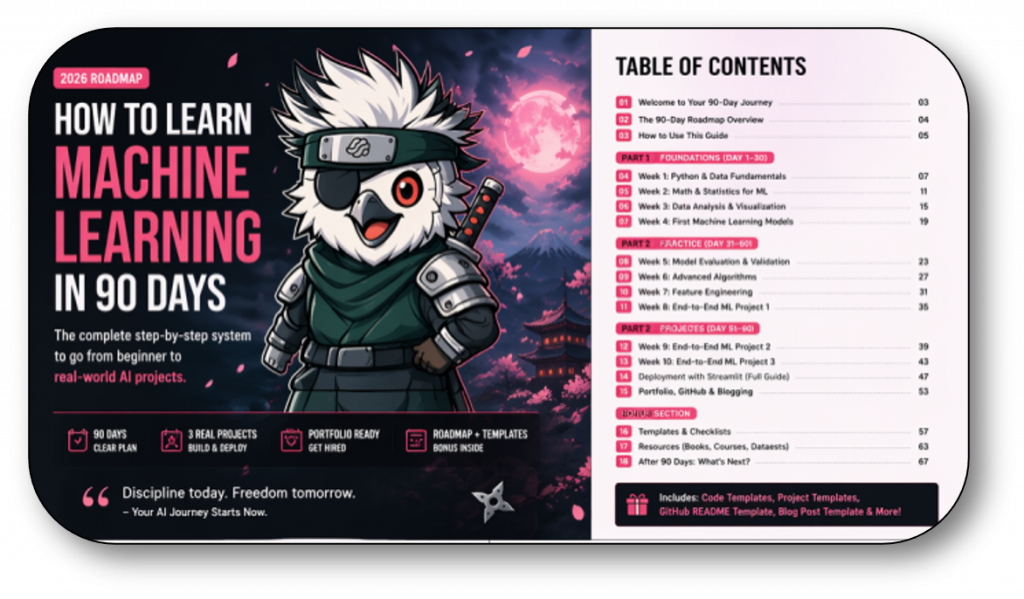
RECOMMENDED PATH
The Fastest Way to Lean ML
Follow a structured 90-day plan to go from zero to real-world projects.
Vibe Coding: The New Paradigm for Experienced Developers
One of the most discussed concepts emerging from the AI coding revolution is “vibe coding” — a workflow where experienced developers use natural language to guide AI through the creation of complex systems.
Think less “write this function” and more “here’s what this system needs to accomplish — build it.”
Former Microsoft engineer and Windows developer Dave Plummer describes vibe coding as a natural evolution of how programmers have always worked — at ever-higher levels of abstraction, with each generation of tools handling more of the low-level detail.
For seasoned engineers, it’s a creative superpower: it compresses days of implementation into hours, frees up mental bandwidth for higher-order thinking, and dramatically accelerates learning in unfamiliar domains.
That said, vibe coding isn’t a shortcut for beginners. Without foundational knowledge of logic, architecture, and debugging, you can’t meaningfully direct AI — or spot when it goes wrong. [See our guide to learning to code in the AI era for where to start.]
Will AI Replace Programmers? The 20x Productivity Argument
This is the question keeping developers up at night. The honest answer: AI won’t replace programmers — it will replace programmers who don’t use AI.
Here’s why, explained through the economic principle of comparative advantage.
Even if AI reaches a point where it can handle 95% of any given coding task, the remaining 5% — high-level system design, UX judgment calls, architectural decisions — becomes dramatically more leveraged. A human focusing exclusively on that critical 5% doesn’t become redundant. They become 20 times more productive.
The numbers back this up. In a conversation with Lex Fridman, Dario Amodei noted that AI success rates on real-world programming tasks jumped from roughly 3% to 50% in under a year, with projections suggesting AI could handle 90% of routine coding tasks by 2026 or 2027. Amodei has since said publicly he believes AI could be writing 90% of code within three to six months.
This isn’t cause for panic. It’s a signal to deliberately reposition toward the work that matters most: design thinking, systems architecture, and the human judgment that no model can fully replicate. [Check out our breakdown of the best AI coding tools available today to start building with them.]
Code as a Mathematical Theorem: The Next Frontier in Software Correctness
As software scales in complexity — think simulations with millions of concurrent users, or the infrastructure underlying virtual worlds — the cost of a single runtime bug becomes catastrophic.
The programming languages community is responding with a profound shift: treating code as a mathematical theorem.
Epic Games CEO Tim Sweeney has spoken in depth about this idea, which is rooted in the Curry-Howard correspondence — a foundational concept in computer science that links programs to formal logical proofs. Applied to next-generation languages like Verse (developed by Epic Games for Unreal Engine and the metaverse), this means future compilers won’t just check whether your code runs — they will require you to prove it is correct before it compiles at all.
The implications are significant:
- Bugs caught at compile time, not in production
- AI-generated code held to the same provable standard as human-written code
- A new layer of trust in software at scale
This isn’t theoretical. It’s already being baked into the languages being built today for the next generation of virtual worlds and large-scale simulations.
Solving Concurrency: Making Parallel Programming Accessible
One of the most persistent challenges in modern software development is concurrency — writing code that runs efficiently across multiple processors simultaneously. Historically, this has been the domain of elite engineers only. For most developers, it was a minefield.
Emerging programming language design is working to change that through transactional memory: an approach that allows developers to write ordinary, sequential-looking code that the runtime automatically scales across parallel processes.
Sweeney’s work on Verse is central to this vision — a language designed from the ground up for massive multiplayer simulation at a scale that makes today’s online games look modest.
The goal is to move the complexity burden from individual programmers to language designers, making it possible for even hobbyist developers to build systems handling millions of simultaneous interactions. That’s a meaningful democratization of one of programming’s hardest problems. [Related: a beginner’s guide to concurrency and async programming.]
A Necessary Caution: The Real Risk of AI-Induced Deskilling
For all the promise of this transition, there is a genuine danger worth naming: deskilling.
Linus Torvalds, creator of the Linux kernel, has offered one of the more grounded takes on the AI coding wave — viewing it not as a revolution but as the next step in a long line of tool evolutions, comparable in kind to the shift from assembly language to C.
He’s skeptical of hype cycles and has suggested waiting closer to a decade before drawing conclusions about lasting impact.
More importantly, there is a real risk that developers who lean on AI without maintaining their own critical faculties will gradually erode their ability to think through hard problems independently. If you can’t reason about what the AI produces, you can’t catch its mistakes — and AI absolutely makes mistakes.
The skills that will matter most in the AI era aren’t syntax memorization. They are:
- Critical thinking and first-principles reasoning
- The ability to evaluate and verify AI output
- System-level design intuition
- “Street smarts” about how software actually behaves in the real world
The developers who thrive won’t be those who outsource their thinking to AI. They’ll be the ones who use AI as a force multiplier on deeply developed judgment. [See also: how to think like a senior engineer.]
What This Means for Your Career as a Developer
The transition to AI-augmented development isn’t a threat to navigate around — it’s a shift to get ahead of. Here’s the practical takeaway:
- Invest in architectural thinking. The higher you operate in the abstraction stack, the more durable your value. [Our systems design primer is a good place to start.]
- Learn to prompt and direct AI effectively. Vibe coding is a skill. Practice it deliberately. [See our guide to prompt engineering for developers.]
- Don’t let foundational knowledge atrophy. Understanding what happens under the hood is what makes you a trustworthy reviewer of AI output.
- Follow the language evolution. Tools like Verse and others built around formal verification represent where serious software development is headed.
The macroscopic era isn’t coming. For many developers, it’s already here.
Frequently Asked Questions about the Future of Programming
Will AI replace software developers? Not entirely. AI is likely to automate a large percentage of routine coding tasks, but high-level design, architecture, and judgment-intensive decisions will remain human-led for the foreseeable future. Developers who adapt their skills accordingly are positioned to become significantly more productive, not obsolete.
What is vibe coding? Vibe coding refers to a development workflow where experienced programmers use natural language to direct AI through building complex software systems, rather than writing every line manually. It’s most effective for developers who already have strong foundational knowledge.
What is the Curry-Howard correspondence and why does it matter for AI coding? The Curry-Howard correspondence is a mathematical principle linking computer programs to logical proofs.
Next-generation programming languages are using this to require that code be formally verified as correct before it compiles — a safeguard against both human and AI-generated errors.
How fast is AI improving at coding tasks? Rapidly. Success rates on real-world programming benchmarks have gone from approximately 3% to 50% within a single year, with Anthropic CEO Dario Amodei projecting that AI could handle 90% of standard coding tasks within months.
Sources & Further Watching on the Future of Programming
- Future of programming with AI — Dario Amodei and Lex Fridman
- Should You Learn Coding Now? — Anthropic CEO Dario Amodei
- The future of programming languages — Tim Sweeney and Lex Fridman
- Torvalds Speaks: Future of AI
- Vibe coding and the future of programming — Dave Plummer and Lex Fridman
Thank you for reading our article on the Future of Programming and Vibe Coding, have a great day!
Subscribe to our awesome newsletter to get the best content on your journey to learn Machine Learning, including some exclusive free goodies!
